As textile manufacturers face increasing pressure to reduce water consumption, control production costs, and maintain consistent fabric quality, low liquor ratio dyeing technology is becoming an important consideration in modern dyeing operations. A Fabric Dyeing Machine With Low Liquor Ratio helps reduce the amount of dye liquor required for each batch, lowering the demand for water, steam, and chemical auxiliaries. However, reducing the liquor volume also places greater demands on fabric transportation, circulation, and mechanical handling. How can manufacturers achieve efficient low liquor ratio processing without compromising fabric appearance? The answer lies not only in the dyeing process itself but also in the design of the main barrel and the way fabric moves inside the machine.
Crease marks are a common quality concern in rope-form fabric dyeing, particularly when fabrics remain folded or compressed in the same position for extended periods. During processing, fabric needs to move continuously through the machine while maintaining suitable circulation and contact with the dye liquor. If fabric accumulates unevenly, experiences excessive compression, or moves irregularly, localized pressure may develop along folded areas. These conditions can leave visible crease marks that are difficult to remove during subsequent finishing processes.
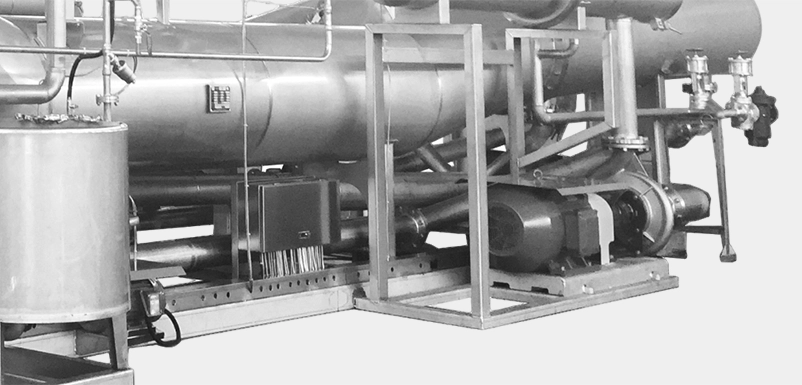
In low liquor ratio dyeing, the relationship between fabric movement and machine structure becomes especially important. A smaller liquor volume changes the operating conditions inside the dyeing vessel, so the machine must maintain effective fabric transportation and stable liquor circulation without relying on excessive mechanical force. For textile mills processing polyester, T/R, T/C, cotton, rayon, and blended fabrics, selecting equipment with an appropriate barrel structure is therefore an important step toward controlling fabric quality and production consistency.
The main barrel is a key part of a liquid flow dyeing machine because it provides the space in which fabric accumulates and moves during processing. Its internal structure directly influences how fabric is stored, transported, and released throughout the dyeing cycle. Yadong's MK Ultra-low Liquor Flow Dyeing Machine adopts a special stepped main barrel structure designed to improve fabric handling under ultra-low liquor ratio conditions.
According to the equipment design, fabric enters the main barrel quickly through the tail section and forms a controlled stack-and-creep movement inside the vessel. Rather than remaining compressed in one position for a prolonged period, the fabric changes its position as it accumulates and moves through the barrel. This movement helps reduce the risk of crease formation associated with long-term fabric extrusion. The design also supports stable operation when processing two fabric strands simultaneously, helping improve equipment utilization and production efficiency.
The value of this structure is not simply that it changes the shape of the dyeing vessel. It is intended to address a practical processing challenge: how to manage a large quantity of rope-form fabric in a relatively compact liquor environment while maintaining suitable movement conditions. By improving fabric accumulation and movement, the machine helps reduce localized compression and supports more stable fabric handling during continuous dyeing operations.
Preventing crease marks is only one part of achieving consistent dyeing results. Fabric circulation also affects how evenly the material is exposed to the dye liquor throughout the processing cycle. Stable circulation helps maintain consistent contact between the fabric and the dye bath, while suitable flow conditions support dye penetration and color distribution. If fabric movement becomes unstable, the resulting differences in liquor contact and processing conditions may contribute to uneven coloration or batch variation.
The MK model is designed for fabric running speeds ranging from 150 to 600 m/min, depending on the machine configuration and process requirements. Selecting an appropriate operating speed requires consideration of fabric weight, construction, surface characteristics, and processing conditions. Excessively aggressive movement may increase mechanical stress on sensitive fabrics, while insufficient circulation may affect fabric transportation and dye liquor exchange. Operators therefore need to balance fabric speed, liquor flow, and process parameters according to the material being processed.
Temperature and pressure control are equally important, particularly when dyeing synthetic fibers. The MK series supports a maximum operating temperature of 140°C and a maximum pressure of 4 kg/cm², making it suitable for high-temperature and high-pressure dyeing processes within its specified operating range. These parameters provide processing flexibility, but actual settings should always be determined by the fabric composition, dye selection, and validated dyeing recipe.
Liquor ratio refers to the relationship between the weight of the fabric and the volume of dye liquor used during processing. A lower liquor ratio means that less liquid is required for each kilogram of fabric. Yadong's MK model supports an adjustable ultra-low liquor ratio of approximately 1:4–6, depending on actual production conditions and process requirements.
Reducing the liquor volume can bring several operational benefits. First, a smaller quantity of water needs to be heated to the required dyeing temperature, which can reduce the energy demand associated with heating. Second, lower liquor consumption may reduce the amount of dyeing auxiliaries required when recipes are properly recalculated for the new bath conditions. Third, using less process water can help reduce the volume of wastewater generated per batch, potentially easing the workload of wastewater treatment facilities.
However, achieving these benefits requires more than simply reducing the amount of water added to the machine. Dye concentration, chemical dosing, circulation conditions, heating rates, and fabric loading all need to be considered together. A well-matched dyeing process is essential for maintaining color levelness, reproducibility, and fabric quality while taking advantage of a lower liquor ratio.
Fabric composition and construction play an important role in equipment selection. Different fibers respond differently to temperature, mechanical movement, dye chemistry, and liquor circulation. The MK model is designed for dyeing and related processing applications involving polyester, T/R, T/C, cotton, polyester-cotton blends, and rayon fabrics.
For polyester fabrics, high-temperature processing is often required to support disperse dyeing. T/R and T/C blends require process conditions suited to their different fiber components, while cotton and rayon need appropriate control of dye selection, chemical conditions, and fabric handling. Manufacturers should also consider fabric weight, density, weave or knit construction, and surface sensitivity before determining the operating recipe.
In addition to dyeing, the MK machine supports untwisting, preshrinking, reduction, and other processing operations suitable for its configuration. This multifunctional capability allows textile mills to consider different production requirements when planning their dyeing equipment investment. Nevertheless, the suitability of each process should be confirmed against the specific fabric and recipe.
Production capacity is another important consideration when purchasing an industrial fabric dyeing machine. A machine that is too small may require more batches to meet production demand, while an oversized configuration may not be the most economical choice for a factory with smaller or less frequent orders. Buyers should evaluate average batch weight, fabric type, daily production targets, available installation space, and future expansion plans.
Yadong's MK series offers three standard capacity configurations:
| Machine Model | Processing Capacity | Main Pump Power |
|---|---|---|
| MK-1-250-P | 180–300 kg | 25 HP |
| MK-2-500-P | 360–600 kg | 50 HP |
| MK-4-1000-P | 720–1,200 kg | 100 HP |
All three configurations feature a maximum operating temperature of 140°C, a maximum pressure of 4 kg/cm², and a fabric speed range of 150–600 m/min. The corresponding liquor volumes are 1,000–1,500 L, 2,000–3,000 L, and 4,000–6,000 L. Comparing these specifications helps buyers evaluate the relationship between batch capacity, machine power, and production requirements before making an investment.
Beyond the main barrel structure and basic machine configuration, auxiliary systems can further improve process management. Depending on the factory's production requirements, the MK machine can be equipped with water and steam flowmeters, proportional heating and cooling devices, proportional dosing systems, meter-length measuring devices, double-barrel systems, fabric arrangement devices, pH control systems, and high-temperature washing systems.
These options address different stages of the dyeing process. Flowmeters help monitor water and steam consumption, while proportional dosing equipment supports more controlled chemical addition. Proportional heating and cooling devices help manage temperature changes during processing, and pH control systems assist operators in maintaining the required chemical conditions. By selecting suitable automation options, dyehouses can improve process monitoring, reduce manual intervention, and support more repeatable production results.
Selecting a dyeing machine is a long-term production investment, so buyers need to consider not only equipment specifications but also the manufacturer's engineering experience, manufacturing capabilities, quality management, and after-sales support. Founded in 2001, Zhejiang Yadong Machinery Co., Ltd. is a high-tech enterprise specializing in textile dyeing machinery. The company reports an annual production capacity of more than 1,000 units, a workforce of over 210 employees, and more than 60 patents.
Yadong's manufacturing and management systems incorporate 6S management, ERP and MES systems, and intelligent warehousing practices. The company also reports ISO 9001 quality management, ISO 14001 environmental management, ISO 45001 occupational health and safety management, and CE certifications. For overseas customers, its technical support system includes remote diagnostics, technical response within 48 business hours, and arrangements for on-site service when required.
These capabilities provide an important foundation for customers evaluating textile dyeing equipment for long-term industrial use. From machine configuration and production planning to technical assistance, the selection of a suitable supplier can influence equipment reliability and the overall efficiency of a dyeing operation.
A successful low liquor ratio dyeing process requires a balance between resource efficiency, fabric circulation, mechanical handling, and process control. While reducing the liquor volume helps lower water and energy requirements, the machine must also provide suitable conditions for fabric movement to minimize prolonged compression and crease formation. With its adjustable 1:4–6 liquor ratio, special stepped main barrel structure, multiple capacity options, and configurable automation systems, Yadong's MK Ultra-low Liquor Flow Dyeing Machine offers a solution for textile manufacturers seeking to improve fabric handling and optimize dyeing production. Choosing the right configuration according to fabric characteristics, batch size, and process requirements is essential for achieving stable and efficient manufacturing results.